


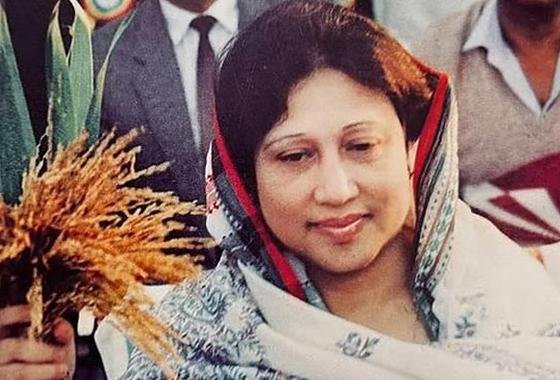
The path to Bangladesh’s economic transformation was significantly shaped during the tenure of former Prime Minister Begum Khaleda Zia. Particularly between 1991 and 1995, her government introduced bold and visionary economic reforms that accelerated the country’s transition toward a liberalized and market-oriented economy.
One of the most significant milestones of her administration was the introduction of the Value Added Tax (VAT), which has since become one of the main pillars of Bangladesh’s revenue system. Alongside this, the government initiated privatization reforms, reducing excessive state control and encouraging private sector participation in key industries.
At a time when Bangladesh inherited a banking system dominated by state-owned institutions, Khaleda Zia’s government approved new private banks and enacted the Bank Companies Act in 1993. This landmark legislation continues to serve as a cornerstone of the country’s financial sector, strengthening regulation and boosting investor confidence.
In the same year, a Privatization Board was established to facilitate the transfer of state-owned enterprises to private ownership. This move accelerated Bangladesh’s integration into the global market economy and stimulated growth in private investment, exports, and industrial development.
The ready-made garments (RMG) sector, now the backbone of Bangladesh’s export economy, began its rapid expansion during Khaleda Zia’s rule. Her government provided crucial policy support to garment entrepreneurs, removing bureaucratic obstacles that had hindered exports.
A key reform was the transfer of the Unit Declaration (UD) authority from the Ministry of Commerce to industry bodies BGMEA and BKMEA. This decision eliminated delays, streamlined export procedures, and enabled the garment industry to grow at an unprecedented pace.
As a result, the RMG sector emerged as Bangladesh’s largest export earner, currently accounting for nearly 85 percent of total export earnings. It has also become the country’s largest source of employment and foreign exchange, driving industrialization and economic resilience.
Economists and analysts widely acknowledge that these achievements were made possible by Begum Khaleda Zia’s forward-looking, courageous, and strategic economic decisions, which laid the foundation for Bangladesh’s modern economic structure.
Leave a comment
Your email address will not be published. Required fields are marked *