


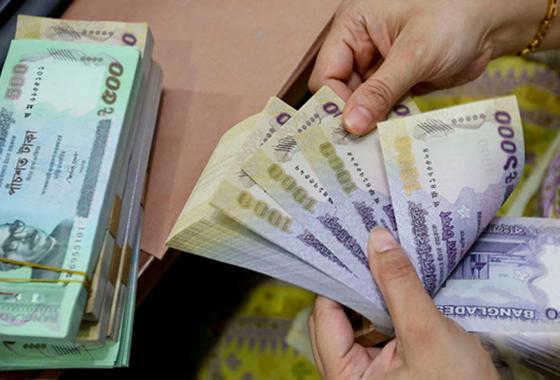
The country’s economy is facing a deep and prolonged crisis driven by rising inflation, stagnant wages, growing unemployment, and severe instability in the banking sector. While official statistics suggest some improvement in key indicators, the ground reality remains grim. Millions of low- and middle-income households are struggling daily to cope with the rising cost of living.
Prices of essential commodities such as rice, edible oil, vegetables, transportation, house rent, education, and healthcare now consume a major portion of household income. Daily wage earners, low-income workers, and small business owners are among the hardest hit, as their earnings have failed to keep pace with inflation, making livelihoods increasingly uncertain.
According to official data, average inflation declined to 8.29 percent in November 2025 from 11.38 percent in November 2024. However, wage growth also slowed to 8.04 percent during the same period. As a result, despite lower inflation on paper, the real purchasing power of ordinary people has not improved and, in many cases, has further deteriorated.
In an effort to recover from the fragile economic conditions inherited from the previous Awami League government, the interim government has implemented several tough measures, particularly aimed at restoring discipline in the banking sector and strengthening foreign exchange reserves. These efforts have brought some relief to the external sector. As of December 18, 2025, foreign exchange reserves rose to $27.88 billion, up from $19.95 billion a year earlier.
Exports, imports, and remittances have shown growth, yet the economy has failed to regain momentum due to weak investment, low growth, and persistent inflationary pressure.
The employment situation has become increasingly alarming. Job creation in the formal sector remains sluggish, while informal and short-term employment is expanding. Many companies are avoiding permanent recruitment, leading to a rise in underemployment.
More than 20 percent of young people aged between 15 and 29 are currently outside education, employment, or training. For new entrants to the labor market, securing stable and dignified jobs has become increasingly difficult, raising concerns about long-term social instability.
Investment remains one of the economy’s most vulnerable areas. In October 2025, private sector credit growth dropped to a record low of 6.23 percent. High borrowing costs, dollar shortages, policy uncertainty, and rising business expenses have forced investors to focus on survival rather than expansion. Foreign direct investment (FDI) remains below one percent of GDP, limiting economic diversification and the creation of quality jobs.
Former Dhaka Chamber of Commerce and Industry President Shams Mahmud said that business expansion or new project initiatives are virtually nonexistent. Access to bank loans has become extremely difficult, while high interest rates and tax burdens have made new investments nearly impossible. As a result, imports of capital machinery have declined, further slowing economic activity.
The banking sector now poses the greatest risk to economic stability. Bangladesh Bank data show that as of September 2025, non-performing loans stood at Tk 6.44 trillion, accounting for approximately 35.73 percent of total loans. Prior to the change in government, the figure was significantly lower. Despite long-term rescheduling facilities, default loans have continued to rise, deepening the crisis of confidence in the banking system.
Additional challenges such as dollar shortages, currency depreciation, a weak tax system, mounting debt, lack of export diversification, corruption, governance deficits, and the impact of global conflicts and geopolitical tensions have further intensified economic pressure.
CPD Distinguished Fellow Professor Dr. Mustafizur Rahman noted that investment remains stalled due to unfavorable overall conditions. Private sector investment has hovered around 22 to 23 percent of GDP for years. If this situation persists, production and employment will decline further, making it difficult for the government to achieve its targeted economic growth.
Despite some statistical improvements, ordinary citizens have yet to experience relief. Inflation, stagnant wages, employment challenges, and deep-rooted weaknesses in the banking sector continue to keep the economy in a state of crisis. Sustainable recovery will require urgent structural reforms, improved governance, and renewed confidence in investment and job creation.
Leave a comment
Your email address will not be published. Required fields are marked *